
Web development for service businesses has one job: turn local searches into booked jobs and signed clients. Plumbers, cleaners, clinics, contractors, accountants and agencies all sell trust and convenience, not products. This is the strategy we use for service businesses at Savoir Management.
Why do service businesses need a different web strategy?
Service buyers need to trust you, confirm you cover their area and contact you quickly. Your site must answer "Can they do it? Are they nearby? Can I trust them? How do I book?" on every key page.

What is the number one strategy for service-based businesses?
Build one focused page for each service and each main area you serve, each with clear benefits, proof and a strong call to action. Focused pages rank for specific searches and convert better than a single generic services page.
Service pages: what is included, process, starting price, FAQs
Area pages: local details, projects in that area, reviews from local customers
Calls to action: call, quote or book on every page
How do trust signals win service clients?
Show reviews, licenses, insurance, guarantees, certifications and real photos of your team and work near every call to action. Trust removes the biggest barrier to contacting a service provider.
How should booking and quotes work?
Offer click-to-call, a short quote form and online booking for fixed-scope services. Respond fast: quick response wins jobs from competitors.
Pew Research Center reports 91% of U.S. adults own a smartphone, so test every contact path on a phone. Our booking system website development guide covers scheduling features.
How does this strategy drive visibility and long-term growth?
Service and area pages compound over time: each one can rank, attract reviews and links and feed the Google Business Profile, building a steady flow of leads without paying for every click.
Google ranks local results on relevance, distance and prominence (local ranking tips). Add LocalBusiness structured data and read our local SEO web development guide.

How should service businesses measure results?
Track calls, quote requests and bookings as conversions by page and source, then expand the pages and channels that bring the best jobs.
Use Google Analytics recommended events and connect leads to your CRM or job management software.
What do real service businesses winning online have in common?
Clear service pages, many genuine reviews, fast mobile sites, quick responses and consistent local listings. None of it requires a huge budget, just a focused site and steady execution.

What should each service page include?
A clear headline naming the service and area, what is included, the process, starting prices or price factors, proof such as reviews and photos of real work, answers to common questions and a prominent call to action.
Service pages do most of the selling for service businesses. A strong structure:
Headline with service and location
Short summary of the outcome customers get
What is included and how the process works
Pricing guidance or what affects the price
Reviews and photos from similar jobs
Frequently asked questions
Call, quote and booking options
Each service deserves its own page, written specifically for that service rather than copied from another.
How should area pages avoid thin content?
Write each area page around genuine local information: jobs completed in that area, local conditions or regulations, travel times, area-specific reviews and photos. Avoid duplicating the same text with only the town name changed.
Near-duplicate location pages provide little value and can be treated as low quality. If you do not have meaningful content for an area yet, mention it on a broader service area page instead, and create a dedicated page once you can make it useful. Google's guidance on helpful, people-first content explains the standard to aim for.
How do photos and video build trust for service businesses?
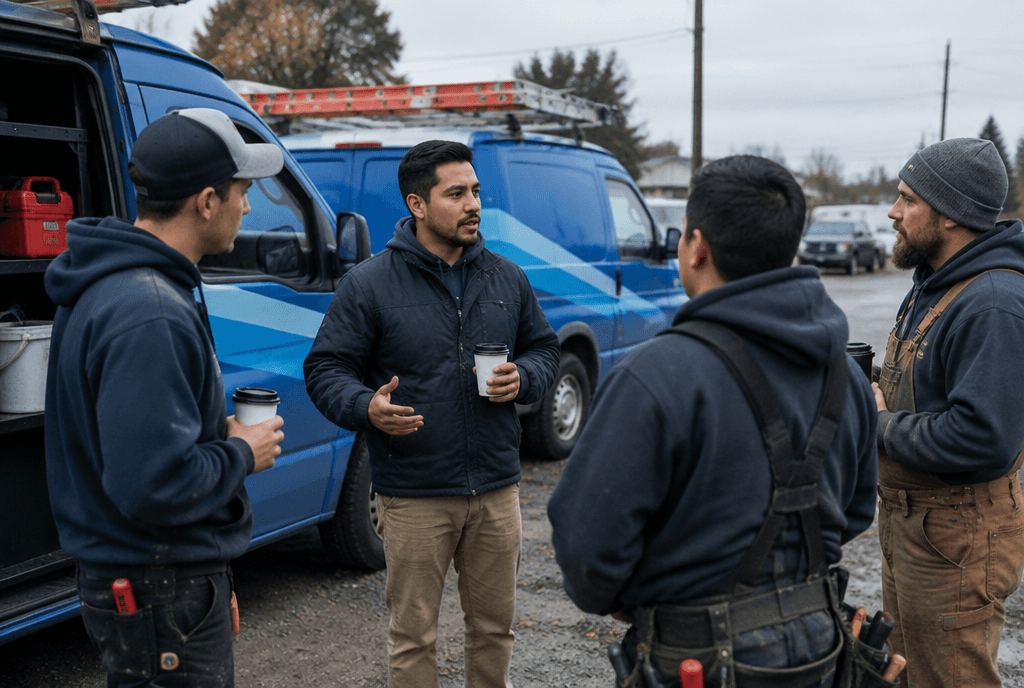
**Real photos of your team, vehicles, equipment and completed work prove you are a genuine local business. Short videos explaining services or showing a job from start to finish build trust faster than text alone.
Ask customers for permission to photograph finished projects, and caption images with the service and area, such as "Kitchen remodel in Round Rock," so they support both trust and local relevance.**
Replace stock images with your own wherever possible. Before-and-after photos work especially well for trades, cleaning, landscaping and beauty services. Compress images so pages stay fast, and add descriptive alt text.
How should service businesses handle pricing questions?
Share starting prices, typical ranges or the factors that affect price, and offer quick quotes. Transparency reduces unqualified inquiries and builds trust with customers comparing providers.
If every job is different, explain why and give examples of common jobs with typical costs. An online quote form with a few structured questions, such as job type, size and timeframe, helps you respond quickly with a realistic estimate.
How fast should service businesses respond to inquiries?
As quickly as possible. Customers needing a service often contact several providers and hire the first credible one to respond. Instant confirmations and fast personal follow-up win more jobs.
Send an automatic confirmation that sets expectations, then call or message back promptly. Route inquiries to mobile devices for teams in the field, and track response times alongside lead volume.
How do you turn customers into repeat clients and referrals?
Follow up after each job, request reviews, send maintenance reminders or seasonal offers and make referral easy. Repeat and referred customers cost far less to win than new ones.
A simple post-job sequence might include a thank-you message, a review request and, at the right interval, a reminder for maintenance or the next service. Referral incentives can work well when they reward both the referrer and the new customer.
How do service businesses use ads with their website?
Local search ads capture people ready to hire, while the website converts them. Send ads to the matching service page or a dedicated landing page, and track calls and form submissions as conversions.
Our guide to Google Ads for local businesses covers targeting, budgets and local ad assets.
How do you measure the strategy's success?
Track calls, quote requests and bookings by page and source, cost per lead from paid channels, review volume and rating, and how many leads become paying jobs.
Combine website analytics with your job management or CRM data so you know which services, areas and channels produce profitable work, then invest more in those.
Review these numbers monthly and keep a short list of improvements: pages with traffic but few inquiries, services with high demand but no dedicated page and areas where you want more work but have little visibility.
How does Savoir Management implement this strategy?
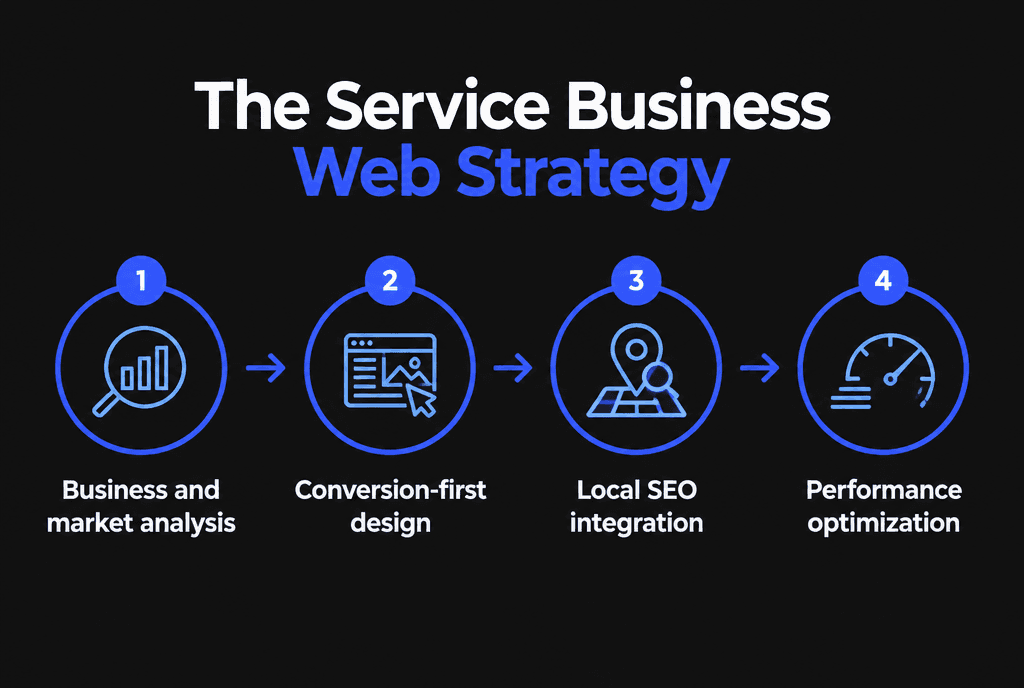
We map your services and areas, build focused pages with trust signals and easy contact paths, set up local SEO and tracking, and keep improving based on which pages produce jobs.
What is the winning move for service-based businesses?
Invest in a site built around services, locations, trust and fast contact, then keep adding reviews and content.

Our web development team builds service business websites. Related guides: why your website might be losing bookings, web development for lead generation and what local businesses must know before hiring a web developer.


