
Web development for local SEO is the half of local search many businesses ignore. A strong Google Business Profile helps you appear in the map pack, but your website supplies much of the relevance and trust behind it. This guide explains the website elements that help local businesses rank, based on the local sites we build at Savoir Management.
How does local SEO work?
Google ranks local results mainly on three factors: relevance (how well you match the search), distance (how far you are from the searcher) and prominence (how well known and trusted you are). Your website influences relevance and prominence directly.
These factors come from Google's own tips to improve your local ranking. You cannot change distance, but you can make your site the clearest, most trustworthy answer for your services and area.
Which web development elements boost local SEO?
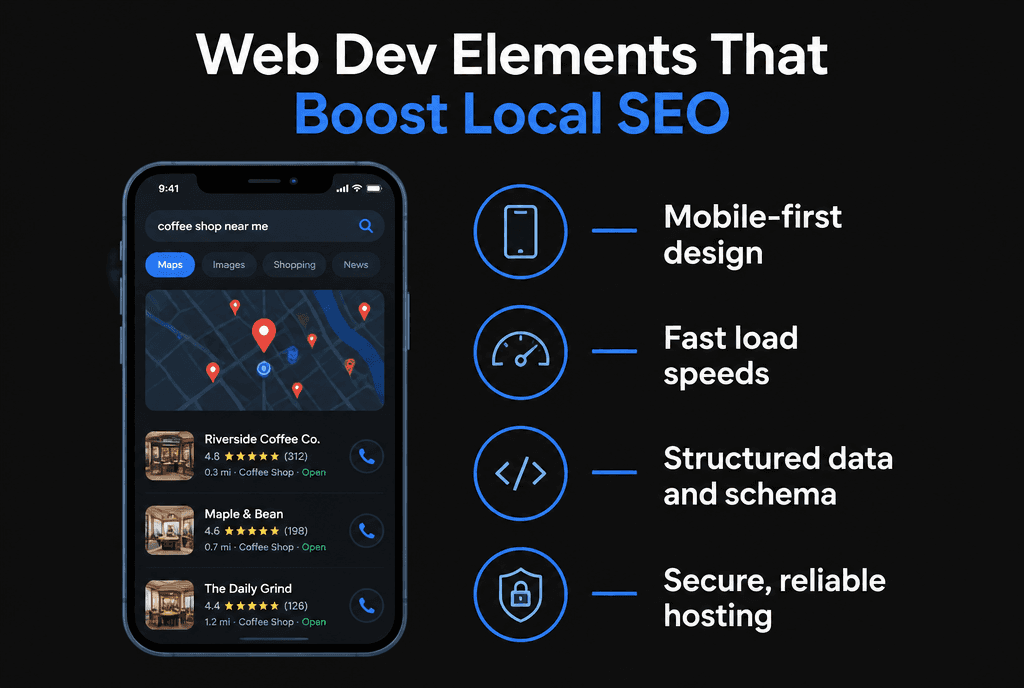
Mobile-first design, fast loading, structured data and secure, reliable hosting form the technical base. On top of that, service and location pages, consistent business details and local proof make the site relevant.
How should a local website be structured?
Create a dedicated page for each core service and, where you truly operate, each location. Link them from a clear navigation and from each other so Google sees the full map of what you offer and where.
Home: who you are, where you serve, primary call to action
Service pages: one per main service, with pricing guidance and FAQs
Location pages: real address or service-area details, local projects, reviews and directions
About and contact pages with consistent business details
Avoid near-duplicate city pages with only the town name changed; Google's spam policies treat those as doorway pages.
How does structured data help local businesses?
LocalBusiness structured data tells Google your business type, name, address, phone, hours and coordinates in a machine-readable format, reducing ambiguity about who and where you are.
Follow Google's LocalBusiness structured data guide and test pages with the Rich Results Test before launch.
Why do NAP consistency and Business Profile links matter?
Matching your name, address and phone number across the website, Google Business Profile and directories helps Google trust your details. Linking your profile to the right landing page sends local visitors to the most relevant page.
Follow Google's guidelines for representing your business: use your real business name, a real address or service area, and accurate categories.
How do mobile performance and speed affect local rankings?
Most local searches happen on phones, and Google indexes the mobile version of your site. Fast, mobile-friendly pages with click-to-call and directions turn local searches into visits.
Google uses mobile-first indexing, and Core Web Vitals targets include LCP within 2.5 seconds. Our site speed guide covers the fixes.

What local content helps a website rank?
Content that proves local experience ranks and converts: project case studies with neighborhoods named, local FAQs, team bios, community involvement and reviews from local customers.
Write for people, not keywords. Google's guidance on helpful, people-first content applies to local pages too.
How should multi-location businesses structure their website?
Give each location its own page with unique content, address, hours, phone number, map, photos, staff and reviews, linked from a clear locations hub. Each location page should match its Google Business Profile exactly.
Avoid copying the same text across location pages and changing only the city name. Instead, describe what is specific to each location: the team, services offered there, parking and access, nearby landmarks and local customer stories. Add LocalBusiness structured data to each page with that location's details, and link each Google Business Profile to its matching page rather than the homepage.
How do service-area businesses rank without a storefront?
Service-area businesses rank by building pages for the services and main areas they cover, keeping a complete Google Business Profile with service areas set, earning reviews and publishing local content that shows real work in those areas.
Plumbers, cleaners, electricians and other mobile businesses can hide their address in their Business Profile while still listing service areas. On the website, create pages for core services and the main towns or neighborhoods you serve, each with genuine local detail such as projects completed there, local regulations or typical problems. Thin pages that only swap place names add little value and should be avoided.
How do reviews on your website support local SEO?
Reviews build trust with visitors and reinforce your relevance for local services. Show recent, genuine reviews on service and location pages, and keep collecting reviews on your Google Business Profile, where they influence local prominence.
Google's local ranking tips explain that review count and score contribute to prominence. On your website, place reviews near calls to action and match them to the page: reviews about roof repair on the roof repair page, reviews from Austin customers on the Austin page. Do not mark up third-party reviews with structured data in ways that violate Google's guidelines; displaying them for readers is enough.
How do you measure local SEO results?
Track local rankings for key service and city searches, Google Business Profile calls, direction requests and website clicks, organic traffic to location and service pages and the leads those pages generate.
Search Console shows the queries that bring visitors to each page, and your Business Profile performance report shows calls and direction requests. Combine them with conversion tracking on your website to see which locations and services produce customers. Review monthly and strengthen pages that rank on page two, because they often move up with better content, internal links and reviews.
What local SEO mistakes should you avoid?
Inconsistent business details, duplicate location pages, keyword-stuffed business names, fake addresses, hiding contact information in images and slow mobile pages.
Each of these can confuse search engines or violate guidelines. Keep your name, address and phone number identical everywhere, write unique content for each location, use your real business name and make phone numbers tappable text. Our list of web development mistakes that hurt SEO covers the technical side.
How long does local SEO take?
Fixes to your Business Profile and website basics can show results within weeks, while competitive rankings usually take several months of consistent work on content, reviews and links.
Local SEO compounds. Every new review, local article and improved service page adds to your prominence and relevance. Pairing organic work with local ads, as described in our guide to Google Ads for local businesses, brings leads while rankings build.
How do local links and mentions help?
Links and mentions from local organizations, news sites, suppliers, chambers of commerce and community groups signal that your business is a real, established part of the area. They support local prominence and bring referral traffic.
Practical ways to earn them include sponsoring local events or teams, joining business associations, contributing expert comments to local media, partnering with complementary businesses and publishing useful local resources that others want to share. Make sure each mention uses your exact business name, and link to the most relevant page on your site, such as a location page.
What are the benefits of building for local SEO?
A locally optimized site brings steady, high-intent visitors from your area without paying per click, supports your map pack rankings and makes ads cheaper by improving landing page quality.

How does local SEO work with local ads?
SEO and ads reinforce each other. Ads give immediate visibility while organic rankings grow, and strong local landing pages improve ad Quality Score and conversion rates.
Read our guide to Google Ads for local businesses, and what to ask before hiring a local web developer.
How do you build a website for local SEO success?
Plan services and locations first, build fast mobile pages with structured data, keep business details consistent, connect your Business Profile and publish local proof regularly.
Our web development team works with our SEO team to build local sites that rank. See also our guide to SEO-optimized web development.