
Web development for consultants is about turning credibility into conversations. Most consulting buyers arrive through referrals, LinkedIn or search, then visit your website to decide whether you are worth a call. This guide covers what that site must do, based on the consultant sites we build at Savoir Management.
What should a consultant's website accomplish?
It should confirm your expertise in seconds, explain how you work, prove results and make booking a call effortless. Its success metric is qualified calls booked, not traffic.
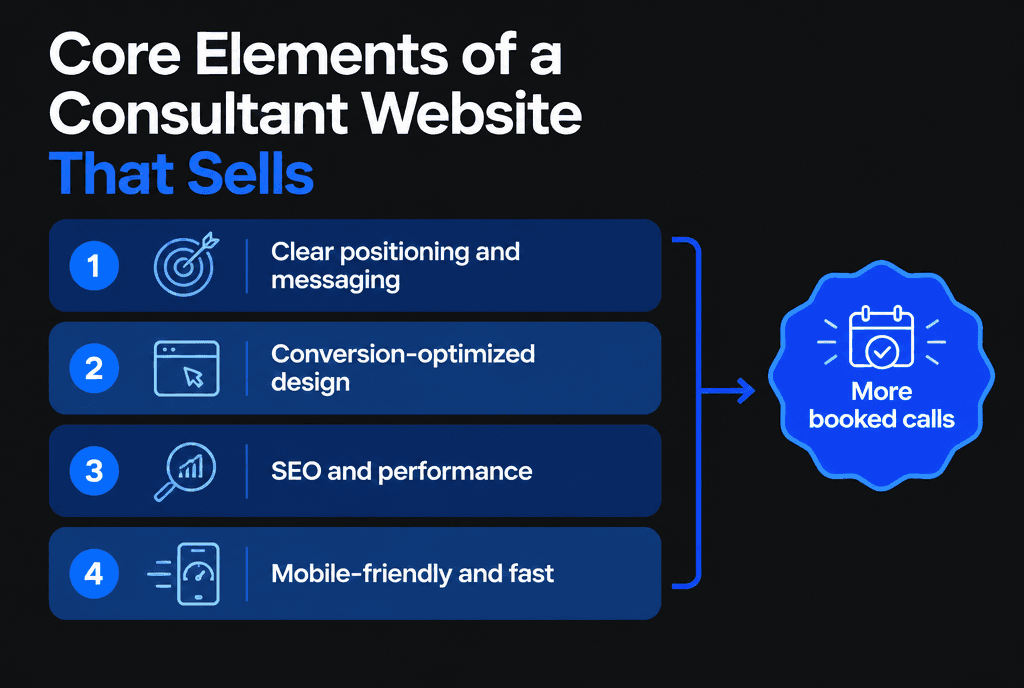
What are the core elements of a consulting website that sells?
Clear positioning and messaging, a conversion-focused design, SEO and performance, and a fast mobile experience. Together they turn interest into booked calls.
Headline: "I help SaaS founders cut churn in 90 days" beats "Strategy consulting."
Services: engagement models, timelines and starting investment.
Method: your framework, named and explained.
Call to action: "Book a 20-minute fit call" on every key page.
How do case studies help consultants win work?
Case studies prove you can deliver the outcome a prospect wants. Structure each as situation, approach and measurable result, with a client quote when possible.
Add Organization structured data for your firm and consider ProfilePage markup for your bio page.
How does web development fuel consultant success?
Your website communicates quality before you speak. A fast, polished, well-organized site supports premium fees; a slow or dated one creates doubt.
Meet Core Web Vitals targets and keep design consistent with your proposals and decks.
How should consultants use content to attract clients?
Publish insights that answer the specific questions your clients ask before hiring, from diagnosing problems to comparing options. Helpful articles rank in search, get shared and give prospects a reason to trust you.
Google's guidance on helpful, people-first content emphasizes first-hand expertise, which is exactly what consultants have. Link every article to the matching service page.
How should booking work on a consulting website?
Embed a scheduling link with real availability, ask two or three qualifying questions and send automatic confirmations and reminders. Removing back-and-forth email increases booked calls.
Track bookings as conversions with Google Analytics recommended events.
How do you build long-term lead generation performance?
Combine a steady publishing rhythm, case studies added after every successful engagement, email capture for readers not ready to talk and quarterly reviews of which pages produce calls.

Read our full guide to web development for lead generation and our landing page guide.
What mistakes do consultants make with their websites?
Being too broad, listing services without outcomes, hiding pricing entirely, burying case studies and making booking hard are the most common mistakes.
"We help businesses grow" says nothing.
No proof near calls to action.
Contact forms instead of direct booking.
Outdated content that signals inactivity.
How should services pages be structured?
Organize services around the problems clients bring you, not your internal methods. Each page should describe who it is for, the outcome, how the engagement works, typical timelines and investment, proof and a clear next step.
A useful structure for each service page:
The problem, described in the client's words
The outcome clients can expect
How the engagement works, step by step
Typical duration and investment or starting point
A short case study or testimonial from a similar client
Answers to common questions
A call to action to book a fit call
If you offer several engagement models, such as advisory retainers, projects and workshops, a comparison table helps prospects choose.
How should consultants use LinkedIn with their website?
Use LinkedIn to share insights and start conversations, and use the website to prove expertise in depth and convert interest into booked calls. Link every post with substance back to a relevant article, case study or service page.
Your LinkedIn profile and website should tell the same story: the same niche, outcomes and positioning. Repurpose website articles into posts, and turn popular posts into longer articles on the site. Make your booking link easy to find on both. Track visits from LinkedIn in analytics to see which topics bring prospects to your site.
How do speaking, podcasts and writing feed the website?
Speaking engagements, podcast appearances and guest articles build authority. Collect them on a media or insights page, link to recordings and transcripts and use them as proof on service pages.
Each appearance is content you can reuse: a short summary article, key quotes, a video clip or a downloadable slide deck. A "speaking" page with topics you cover and past events also helps event organizers book you. Links from reputable publications and podcasts can support search visibility over time.
How do you show expertise when client work is confidential?
Anonymize case studies by describing the industry, company size, challenge, approach and results without naming the client. Use frameworks, methods and insights to demonstrate expertise without revealing confidential details.
Many consulting engagements involve sensitive information. Ask clients what you can share and get approval for anonymized stories. Aggregated results across several engagements, original research and detailed explanations of your method can be just as persuasive as named logos.
What should a consultant's about page say?
Explain your background, why you focus on your niche, your approach and what working with you is like. Include credentials, relevant experience and a professional photo, and end with a call to action.
Prospects hire consultants they trust and like working with. Share the story behind your expertise, the clients you serve best and the values that guide your work. Keep it focused on how your experience helps clients, rather than a full résumé. ProfilePage structured data can help search engines understand the page.
How should proposals and follow-up work online?
After a discovery call, send a clear proposal quickly, with scope, outcomes, timeline and investment, plus links to relevant case studies. Use e-signature and online payment to make saying yes easy.
Digital proposals let you see when prospects open them and which sections they read, which helps timing follow-up. Keep proposal templates consistent with your website's positioning and design, so the experience feels professional from first visit to signed agreement.
How should consultants choose a niche?
Pick a niche where your experience gives you an unfair advantage, clients have urgent, valuable problems and you can reach decision-makers. A clear niche makes your website, content and referrals far more effective.
A niche can be an industry ("operations consulting for regional healthcare groups"), a problem ("reducing churn for subscription software companies") or a client type ("founders preparing for their first funding round"). The narrower your focus, the easier it is to write headlines and case studies that make ideal clients think "this is exactly us." You can still accept work outside the niche; the website simply leads with the work you want more of.
How do you measure whether your website brings clients?
Track booked calls, proposals sent and engagements won by source and landing page, plus which articles and case studies visitors read before booking. Judge the site on revenue influenced, not traffic.
Set up conversion tracking for booking links and contact forms, ask new clients how they found you and record the answer in your CRM. Over a few months you will see which content, channels and services produce the best clients, which tells you what to write and promote next.
How often should a consultant's website be updated?
Add a case study after each successful engagement, publish insights regularly and review services, pricing and positioning at least twice a year. An active website signals an active, in-demand practice.
Small, regular updates are easier than occasional overhauls. Keep a running list of client questions, project lessons and industry changes; each one can become an article that answers what prospects are searching for.
How do you get a consultant website built?
Define your niche and outcome, gather case studies, choose a booking tool, then build a focused site with room for insights.
Our web development team builds consultant websites, and coaches should read our guide for online coaches. B2B consultancies may also find our B2B web development guide useful.


