
Getting a website built in 7 days is realistic when the scope is clear and the process is disciplined. Speed fails when content is missing, decisions drag or the project quietly grows. This framework is how we run fast-turnaround projects at Savoir Management without sacrificing speed, accessibility or SEO.
Is a 7-day website realistic?
Yes, for focused websites of about 5 to 10 pages with ready content and quick approvals. Large catalogs, custom applications and complex integrations need more time.
What do you need before day 1?
Have your logo, brand colors, page copy or detailed notes, photos, service information, domain and hosting access and one decision-maker available. Missing content is the number one cause of delays.
What does the 7-day website development framework look like?
Day 1 strategy and sitemap, days 2 and 3 design, days 4 and 5 build and content, day 6 testing and fixes, day 7 launch and handover.
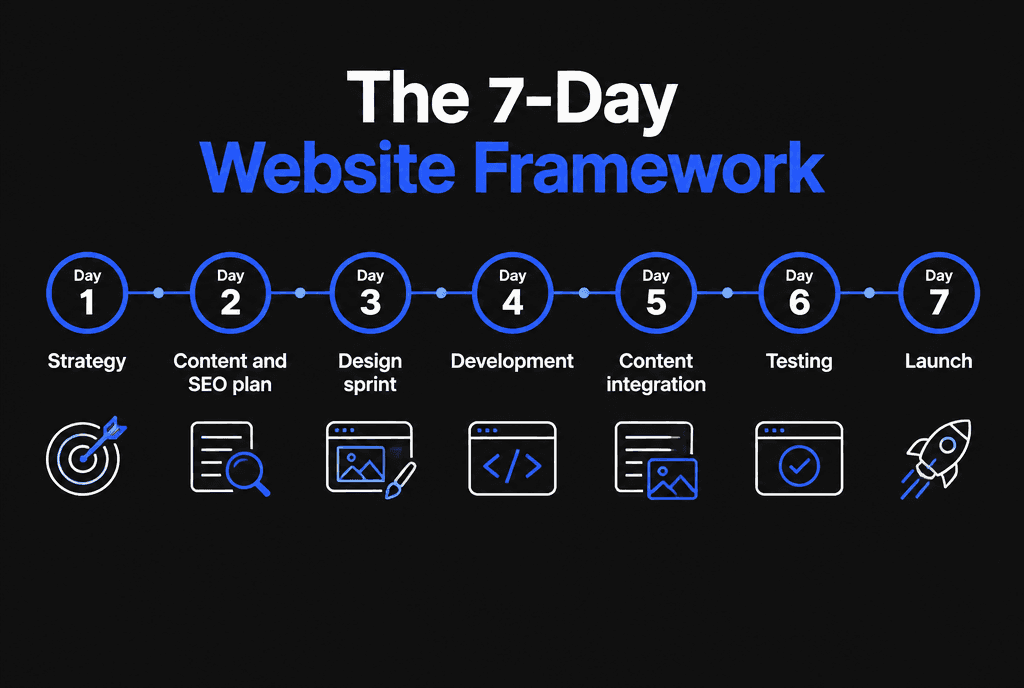
Day 1, strategy: goals, audience, sitemap and calls to action.
Days 2 and 3, design: homepage and key templates using proven layouts.
Days 4 and 5, build: develop pages, add content, set up forms and integrations.
Day 6, testing: mobile, speed, accessibility, forms, tracking and SEO basics.
Day 7, launch: go live, submit the sitemap and train your team.
What should be tested before a fast launch?
Test on real phones, check Core Web Vitals, confirm every form and tracking event, review accessibility basics and confirm titles, meta descriptions and the sitemap.
Accessibility basics from WCAG
Conversion events in Google Analytics
Sitemap submitted in Search Console, as described in Google's sitemap guide
Use our full website launch checklist.
What should you leave for phase two?
Defer extra pages, complex integrations, custom features and nice-to-have animations. Launch the core site, learn from real visitors, then build what the data supports.
What are the long-term benefits of fast-turnaround development?
You start generating leads weeks or months sooner, test messaging with real data and avoid projects that drag on and lose momentum.

Which websites suit a 7-day build?
Service business sites, consultant and coach sites, landing pages for campaigns, event sites and simple product sites are good candidates. They have a clear goal, a modest number of pages and standard features.
Sites that do not suit a 7-day timeline include large e-commerce catalogs, custom web applications, multilingual sites, sites with complex integrations and projects requiring regulatory or legal review. Those can still move quickly, but they need more time to do safely.
What should day one strategy cover?
Agree on goals, audience, the main call to action, the sitemap, content responsibilities and decision-making. A clear day one prevents the delays that derail fast projects.
A focused strategy session answers:
What should visitors do, and how will we measure it?
Which pages are essential for launch?
What does each page need to say, and who provides it?
Which tools must connect, such as booking, CRM or email?
Who approves design and content, and how quickly?
Write the answers down and share them with everyone involved.
How do proven components speed up design and development?
Using a tested library of components, such as headers, hero sections, service blocks, testimonials, forms and footers, lets teams assemble quality pages quickly and focus custom work where it matters.
Components that have already been built for speed, accessibility and responsiveness reduce both build time and testing time. The brand still feels custom through typography, color, photography and copy.
How should content be prepared for a fast build?
Provide final or near-final copy, logo files, brand colors, photos and service details before day one. If copy is not ready, provide detailed notes and allow a copywriter to draft quickly.
Content is the most common source of delay. A simple template for each page, covering headline, key points, proof and call to action, helps you gather what is needed. Our website launch checklist lists the content details to confirm before launch.
How do you keep quality high on a tight timeline?
Fix the scope, use proven components, test throughout rather than only at the end and keep a short list of launch-blocking checks: mobile layout, forms, speed, accessibility basics, tracking and SEO settings.
Daily check-ins catch issues early. Testing on real phones each day, rather than once at the end, prevents last-minute surprises. Anything that is not essential moves to a phase-two list instead of delaying launch.
What does phase two usually include?
Additional pages, blog content, advanced integrations, extra landing pages, animations and refinements based on real visitor data.
Launching fast gives you data. After a few weeks, analytics and customer feedback show which pages work and what visitors are looking for, which makes phase two investments far more targeted.
How do you make a fast site rank in search?
Build on clean templates with unique titles, headings and descriptions, add structured data, submit a sitemap and publish helpful content over the following weeks. Speed of build does not limit SEO if foundations are right.
Follow Google's SEO Starter Guide, validate structured data with the Rich Results Test and add pages for each service and location over time. Our guide to local SEO web development explains what local businesses should add next.
What does a 7-day website cost?
Fast-turnaround sites are typically priced as fixed packages based on pages and features. Costs are often lower than longer custom projects because scope is focused and components are reused.
See our 2026 website cost estimates and web development packages for startups for typical ranges and what packages include.
What happens if content or approvals are late?
The launch date moves. Fast builds depend on quick decisions and ready content, so agree on response times upfront and have a backup plan, such as launching with fewer pages.
Rather than delaying the whole site, launch the essential pages on time and add the rest as soon as content is ready. A live, focused site generates leads; a perfect site that is still waiting for content does not.
What tools make fast builds possible?
A mature CMS or site platform, a tested component library, shared project boards for content and feedback, staging environments and automated checks for speed, links and accessibility.
Fast teams avoid reinventing their process for each project. A shared board shows what content is needed and when, staging lets clients review real pages instead of static mockups, and automated tools such as PageSpeed Insights and WAVE catch issues during the build rather than at the end. Clear checklists turn speed into a repeatable process.
How should you measure a fast-launch site?
Set up conversion tracking before launch, then review leads, calls, bookings or sales weekly for the first month. Early data shows which pages work and where phase two should focus.
Track the main call to action as a conversion with Google Analytics recommended events, watch Search Console for indexing and errors, and compare mobile and desktop behavior. If visitors arrive but rarely convert, adjust headlines, offers and forms before adding more pages. A fast launch is most valuable when it turns into fast learning.
How does Savoir Management get it done?
We use a fixed scope, proven components, daily check-ins and a dedicated team, so decisions happen fast and quality checks are never skipped.

Our web development team offers fast-turnaround builds. Related guides: building an e-commerce site fast, landing page development and web development packages for startups.


